
Fluid Borders:
The Aesthetic Evolution of Digital Sculpture
by Christiane Paul
Originally posted as ISC Web Special July 1999
To determine the date (or even year) of birth of an art form or artistic technique is always a problematic if not futile endeavor but it might be safe to say that the 1990s are the decade when digital/virtual sculpture officially began to exist — even if it had its roots in earlier experiments.
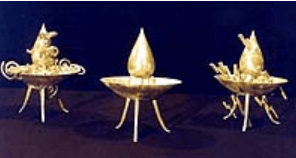
In the early 90s, Tim Duffield, Bruce Beasley, Rob Fisher and David Smalley founded the Computers and Sculpture Forum (CSF) and in 1993, Intersculpt, a biennial computer sculpture exhibition conceived by Christian Lavigne and Alexandre Vitkine, was organized by the French organization Ars Mathématica. The groups have by now collaborated on several events and this fall, Intersculpt 99 — the 4th installment of the exhibition — will take place as a networked, international collaboration of several groups and organizations that actively promote digital technologies in the creation of sculptures.
In France, works and documents will be shown at the town hall of Paris VI, from October 1 – 9, 1999. The group FasT-UK (Fine Art Sculptors & Technology in the UK), created by the sculptor Keith Brown from The Manchester Metropolitan University and dedicated to encouraging sculptural work that involves the use of computers, is the focal point of the British part of Intersculpt, which will be presented at the Museum of Science and Industry in Manchester.
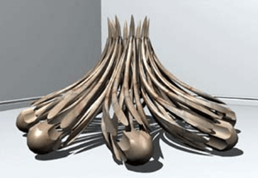
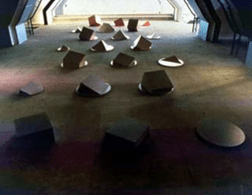
In the US, the College of Design, Architecture, Art and Planning of the University of Cincinnati, headed by Derrick Woodham — who created DAAP, a virtual sculpture park where visitors may participate as avatars in the DAAP zone.
| At Arizona State University in Phoenix, the PRISM [Partnership for Research In Stereo Modeling] Lab, run by Dan Collins and Mark Henderson and dedicated to promoting interdisciplinary research in the areas of 3D data acquisition, visualization & modeling, will create and exhibit telesculptures. In view of the upcoming event, it seems to be an apt time to talk to some of the artists who have made significant contributions to the evolution of digital sculpture and are involved in the organization of Intersculpt 99. |
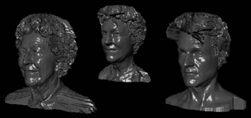
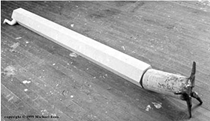
The following article is based on e-mail interviews with Christian Lavigne (Ars Mathématica), Keith Brown (FasT-UK), Derrick Woodham (College of Art / University of Cincinnati), Dan Collins (PRISM Lab / ASU) and Robert Michael Smith, a sculptor who has done pioneering work in the field of digital sculpture and has been actively involved its promotion, as well as Michael Rees, who has gained wide exposure for the use of rapid prototyping in his sculptural work.
Divided into six sections:
Digital sculpture – A Trojan Horse?
Form and Space – New Dimensions
Developments, Access, and Availability
Telemanufacturing and Networked Sculpture
the article outlines some of the crucial issues and challenges that digital and virtual sculptors are facing today.
Christiane Paul is chief curator/director of the Sheila C. Johnson Design Center at Parsons School of Design and an associate professor in the School of Media Studies at The New School, and Adjunct Curator of New Media Arts at the Whitney Museum of American Art in New York City. Wikipedia
 Robert Michael Smith